The Ultimate Guide to Freelancing: How to Start, Grow, and Succeed

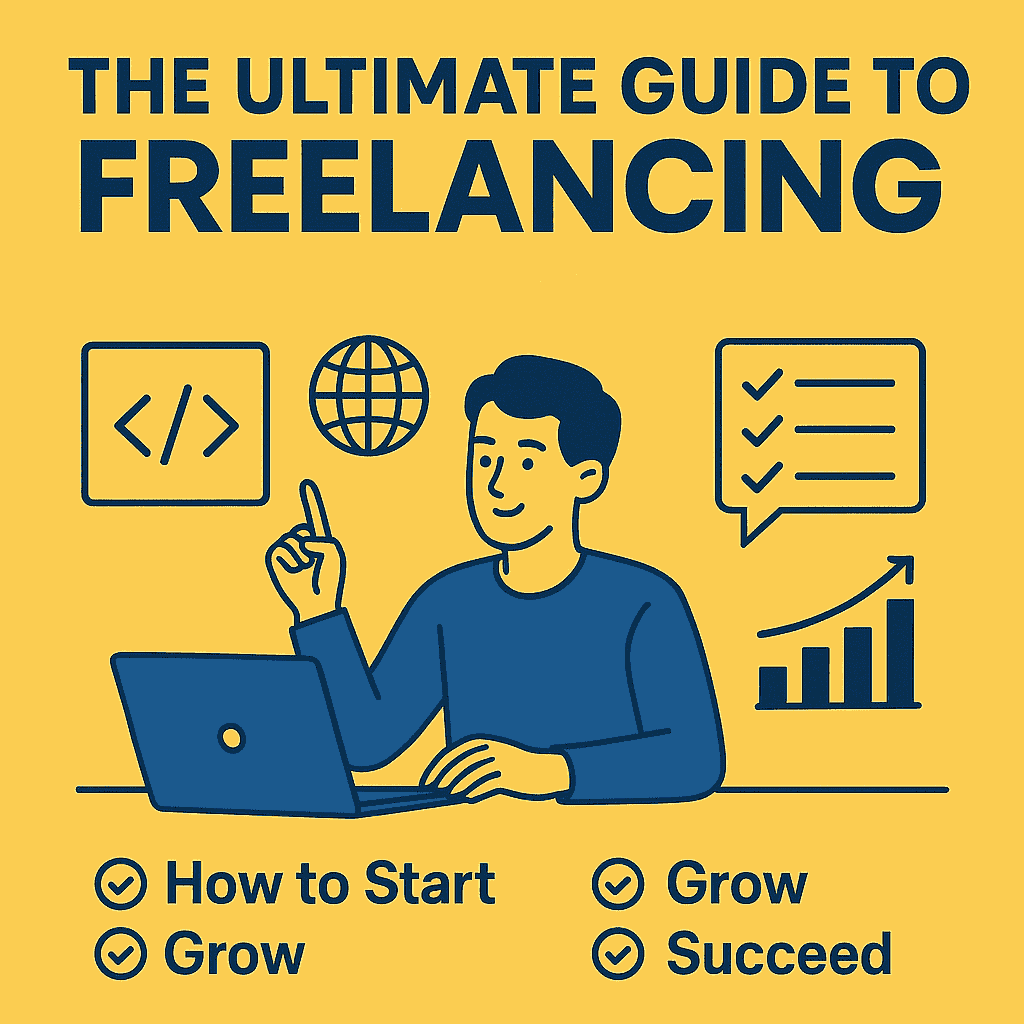

Freelancing has evolved from a side hustle into a full-time, high-income career choice for millions worldwide. With the rise of remote work, digital platforms, and a global talent economy, 2025 is one of the best times to start your freelancing journey.
Whether you’re a student, a professional looking to escape the 9-5 grind, or someone who wants to monetize a skill, this guide will help you understand freelancing from scratch and show you how to build a thriving freelance business.
Freelancing is a form of self-employment where individuals offer their services to clients on a project or contractual basis—often remotely. Unlike a full-time employee, a freelancer can work with multiple clients simultaneously and has the freedom to choose projects, set rates, and work schedules.
Graphic Design
Web Development
Content Writing
Digital Marketing
Video Editing
Virtual Assistance
Data Entry
UI/UX Design
Translation
Consulting (Business, IT, Legal, Finance)
Here are the major advantages of freelancing:
Work from anywhere, anytime. You control your hours and work-life balance.
The more you work or specialize, the more you earn. No salary cap like a traditional job.
You can work with global clients across industries, gaining exposure and experience.
Freelancing helps you constantly learn new tools, software, and trends in your industry.
Pick the clients, projects, and niches that interest you the most.
Choose a skill that is in demand and that you enjoy. It could be:
Something you’re already good at (e.g., writing, editing)
A new skill you’ve learned (e.g., web design, SEO)
Before clients hire you, they want proof of work.
Create 3–5 samples of your work.
Use free platforms like Behance, Dribbble, or GitHub for tech/design.
Writers can use Medium or a Google Doc PDF.
Start with platforms like:
Fiverr
Upwork
Freelancer
Toptal (for advanced professionals)
Guru
Or niche/local platforms (like Freelanceresult.com)
A good proposal/pitch includes:
A brief intro
How you understand the project
How you can help (with examples)
Call to action + reasonable pricing
Once you get your first job:
Overdeliver and ask for a review.
Reviews = Trust = More clients.
It depends on your skill, experience, and platform. For example:
| Skill | Beginner (Per Hour) | Expert (Per Hour) |
|---|---|---|
| Content Writing | ₹500–₹1,000 | ₹2,000–₹5,000 |
| Web Development | ₹800–₹2,000 | ₹3,000–₹6,000 |
| Graphic Design | ₹500–₹1,500 | ₹2,000–₹4,000 |
| Digital Marketing | ₹1,000–₹3,000 | ₹5,000–₹10,000 |
Once you’ve started earning, here’s how to scale:
Generalists compete on price. Specialists charge more.
Example: Instead of just “web developer”, be a “Shopify developer for fashion brands.”
Every 3–6 months, increase your pricing as your portfolio and reviews grow.
Create a website, grow a LinkedIn presence, or post on social media platforms like Twitter and Instagram.
Bundle your services and offer packages:
e.g., “Starter logo package – ₹5,000 | Premium branding pack – ₹20,000”
Once you’re stable, outsource repetitive tasks or hire subcontractors to scale.
| Challenge | Solution |
|---|---|
| Inconsistent income | Build a client retainer model; save a 3-month buffer |
| Finding clients | Use cold emailing, LinkedIn, job boards, and niche platforms |
| Non-payment or scams | Always use escrow or milestone payments |
| Burnout | Set work hours, take breaks, and don’t overbook |
| Learning curve | Keep improving through YouTube, Udemy, and online communities |
Many wonder if AI will replace freelancers. Here’s the truth:
AI can automate tasks but can’t replace creativity, strategy, or human emotion.
Freelancers who use AI tools (like ChatGPT, Canva, Grammarly, Notion AI) will outperform others.
High-value roles like consulting, UX design, strategy, branding will always need human insight.
Verdict: Freelancing is not dying—it’s transforming. Learn to evolve.
| Need | Tool |
|---|---|
| Project Management | Trello, Notion, ClickUp |
| Communication | Zoom, Slack, Google Meet |
| Design | Canva, Figma, Adobe Suite |
| Writing | Grammarly, Hemingway, ChatGPT |
| Time Tracking | Toggl, Clockify |
| Invoicing | PayPal, Razorpay, Zoho Invoice |
| Portfolio | Behance, GitHub, Notion, your website |
Freelancing offers freedom, income, and growth—if you treat it like a business, not a hobby. It’s a career path with zero entry barriers, global opportunities, and future-proof potential (especially when blended with AI tools).
Start today, stay consistent, and in 6-12 months, freelancing could become your full-time income source.